Summary
Modern warehouses and large work facilities face unique climate control challenges. High ceilings, expansive floor plans, variable occupancy patterns, and heat-generating equipment create conditions where traditional air conditioning proves impractical or prohibitively expensive. This guide explores how industrial cooling system technology addresses warehouse environments, compares cooling methods, discusses fresh-air circulation strategies, and demonstrates why evaporative air cooler solutions have become industry standard for large workspaces.
The Warehouse Climate Control Challenge
Why Standard Solutions Fall Short
Warehouses are fundamentally different from traditional buildings:
Physical Characteristics
- Height: 20–40+ feet (standard offices: 8–10 feet)
- Floor area: 5,000–100,000+ sq ft
- Open layout without interior partitions
- Limited or no sealed envelope (large bay doors for material handling)
Operational Realities
- 24/7 operation for many facilities (distribution centers, cold chain logistics)
- Frequent door openings allowing air escape
- Internal heat sources (forklifts, lights, equipment)
- Variable occupancy (low activity vs. peak shipping periods)
Economic Constraints
- Energy costs directly impact margins
- Installation budgets are typically tight
- Downtime during implementation is costly
- Mechanical systems must be durable and reliable
Traditional air conditioning—designed for sealed offices with controlled occupancy—cannot efficiently cool warehouse volumes. Industrial cooling system solutions, by contrast, are engineered specifically for these operational realities.
The Warehouse Cooling Equation
Effective warehouse cooling requires addressing multiple factors simultaneously:
Temperature Control → Maintain stable, safe conditions Fresh Air Circulation → Continuous replacement and movement Heat Reduction → Address internal and external sources Energy Efficiency → Minimize operating costs Air Quality → Manage dust, odors, and contaminants
Understanding Warehouse Heat Sources
Internal Heat Generation
Lighting Systems
- Traditional HID bulbs: Significant radiant heat
- LED conversions reduce heat by 60–70% but aren't universal
- Typical contribution: 3–8°C temperature rise in warehouse ambient
Material Handling Equipment
- Forklift engines emit heat continuously during operation
- Pallet jacks and electric equipment contribute incrementally
- In high-activity facilities, equipment heat equals 2,000–5,000 BTU/hour additional load
Product and Stored Goods
- Some products absorb solar heat (dark packaging, roofing materials)
- Others release heat (fermentation, curing, decomposition)
- Density of storage affects air circulation patterns
Personnel Activity
- Each worker generates ~200W body heat
- High-activity zones accumulate this over shift durations
- Typically minor factor in large warehouses unless densely packed
External Heat Sources
Solar Gain
- Roof exposure: Uninsulated or poorly insulated roofs absorb significant heat
- Wall exposure: East/west-facing walls receive intense afternoon sun
- Metal roofing amplifies heat absorption
- Typical solar contribution: 10–20°C rise above ambient in summer
Ambient Temperature
- Regional climate sets baseline heat stress
- Time of day and season create variability
- Nighttime operation experiences different thermal conditions than daytime
Industrial Air Cooling System Methods
Evaporative Air Cooler Technology
How Evaporative Cooling Works
Evaporative air cooler systems use the cooling power of water evaporation:
- Outdoor air passes through water-saturated cooling pads
- Water evaporation absorbs sensible heat from incoming air
- Cooled, humidified air is pushed into the warehouse space
- Temperature drops of 8–20°C are typical (depending on climate)
Advantages for Warehouses
- Low installation cost (minimal ductwork required)
- Exceptional operating economy (1/3 to 1/4 energy of AC)
- Continuous fresh air supply (no recirculation stagnation)
- Compatible with warehouse bay doors and open layouts
- Scalable (add units as facility expands)
Limitations
- Less effective in high-humidity climates (>60% RH)
- Slight humidity increase (generally beneficial in dry climates)
- Requires adequate water supply and drainage
- Cooling capacity dependent on outdoor humidity
Traditional Air Conditioning
How AC Cools Warehouses
Compressor-based cooling removes heat via refrigerant cycle:
- Refrigerant evaporates in indoor coils, absorbing heat
- Compressed refrigerant releases heat outdoors
- Cooled air recirculates or is ducted throughout space
Warehouse AC Challenges
- Enormous cooling capacity required (expensive equipment)
- Continuous ductwork throughout large spaces (complex installation)
- High electrical consumption (burden on facility infrastructure)
- Frequent door openings negate cooling efficiency
- Maintenance complexity and cost
When AC Is Justified
- Temperature-sensitive products requiring precise control (pharmaceuticals, electronics)
- High-humidity environments where evaporative cooling won't work
- Existing infrastructure supporting AC operation
- Premium facilities requiring luxury environmental conditions
Hybrid Approach: Evaporative + Spot Cooling
Many warehouses optimize with a combined strategy:
- Primary cooling: Evaporative air cooler systems manage ambient warehouse temperature
- Supplementary cooling: Targeted AC or coolers in specific zones requiring precision
- Cost efficiency: Hybrid approach balances capital investment with operational economy
- Flexibility: Modular design accommodates changing needs
Fresh-Air Circulation and Ventilation Strategy
The Critical Importance of Air Movement
Large warehouses create natural stratification: hot air rises, cool air settles. Simply lowering ambient temperature isn't enough—strategic air circulation prevents dead zones and ensures worker safety.
Air Stratification Problem
- Hot air concentulates near ceiling (wasted cooling)
- Ground-level zones remain cooler but stagnant
- Workers near roof level experience excessive heat
- Uneven conditions increase discomfort and safety risk
Circulation Solution
- Directional cooling: Ceiling-mounted fans direct downward airflow
- Perimeter distribution: Multiple coolers positioned around warehouse perimeter
- Intake pathways: Open windows or dedicated intake ports supply fresh air
- Exhaust management: Roof vents or wall openings allow hot air escape
Fresh Air Intake Design
Natural Intake Approaches
- Windows and louvers on cooler (windward) sides
- Allows natural convection assisting cooler performance
- Minimal equipment cost
- Dependent on outdoor conditions and facility orientation
Mechanical Intake
- Dedicated intake ducts from outdoors
- Pre-filtration removes dust and debris
- Controlled intake independent of door openings
- Supports consistent cooler performance
Best Practice: Combination approach—natural intake supplemented by mechanical backup, with intake pathways distributed around warehouse perimeter.
Exhaust and Heat Removal
Cooled air must escape to prevent pressure buildup and stagnation:
Roof Exhaust Vents
- Stratified hot air naturally exits at ceiling
- Turbine vents use wind energy for passive exhaust
- Motorized roof fans provide active exhaust control
- Multiple vents prevent pressure zones
Wall Openings
- Bay doors serve dual purpose (material handling + ventilation)
- Side windows provide supplementary exhaust
- Louvered openings control air escape
Cross-Ventilation Pathways
- Design intake and exhaust to create air movement patterns
- Avoid dead zones by ensuring perimeter air circulation
- Use internal obstructions (storage racks) strategically to guide flow
Warehouse Cooling Application Examples
Distribution Centers and Logistics Hubs
Challenge: 24/7 operation with peak activity periods generating intense heat and occupancy
Solution:
- Multiple large evaporative air cooler units positioned around perimeter
- Overhead fans ensuring air circulation and stratification management
- Fresh air intake on receiving dock side
- Exhaust through roof vents above shipping areas
- Hybrid spot cooling in office areas if required
Outcome: 12–16°C temperature reduction, worker safety improved, 70% energy savings vs. AC
Manufacturing Workshops and Assembly Facilities
Challenge: Heat-generating equipment plus worker comfort requirements, precise temperature for some processes
Solution:
- Primary industrial cooling system for ambient warehouse temperature
- Supplementary equipment cooling near specific machinery
- Ventilation capturing process heat at source
- Smart controls coordinating cooler operation with production schedules
Outcome: Consistent 8–12°C reduction, improved product quality through temperature stability, 65% energy savings
Cold Storage and Perishables Handling
Challenge: Transition zones between refrigerated and ambient areas, personnel working in extreme conditions
Solution:
- Evaporative air cooler in staging areas between cold storage and warehouse
- Bridge temporary temperature gradient reducing thermal shock
- Fresh air circulation removing cold air stratification
- Spot cooling for personnel comfort during loading/unloading
Outcome: Improved worker safety (reduced temperature shock), faster material throughput, maintained cold chain integrity
Automotive and Equipment Storage
Challenge: Large floor areas, variable occupancy, occasional heavy equipment operation (lifts, testing machinery)
Solution:
- Strategically positioned air cooler for warehouse systems
- Ceiling fans redistributing cooled air throughout space
- Maintenance bays equipped with supplementary cooling
- Variable-speed controls matching capacity to actual occupancy
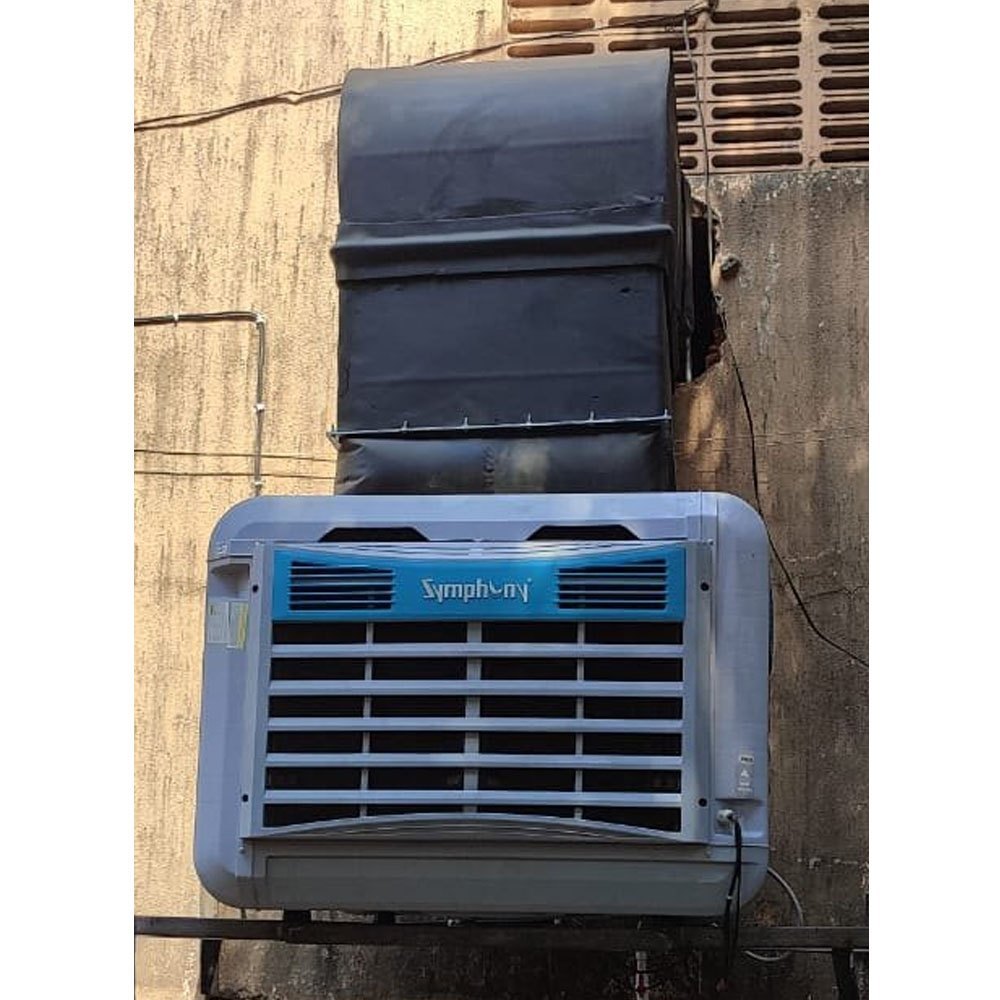
Outcome: Comfortable storage environment, manageable maintenance zone temperatures, 15–20°C improvement over ambient
Textile and Apparel Warehousing
Challenge: Humidity-sensitive products, large inventories, specific storage conditions
Solution:
- Evaporative air cooler providing gentle temperature reduction with humidity control
- Air movement preventing moisture stagnation
- Product storage areas maintain improved conditions through consistent circulation
- Operating economy preserves product margin
Outcome: Maintained product quality, extended shelf life, minimal environmental control cost
Designing a Warehouse Industrial Cooling System
Phase 1: Load Assessment
Calculate total cooling demand:
|
Heat Source
|
Typical Contribution
|
|
Solar gain (summer peak)
|
40–60% of total load
|
|
Equipment and forklifts
|
15–25% of total load
|
|
Personnel and lighting
|
10–20% of total load
|
|
Infiltration (door openings)
|
10–15% of total load
|
Formula: Estimated Total Heat Load (BTU/hour) ÷ 15,000 BTU/hour per cooler unit = Number of units needed
Example: 50,000 sq ft warehouse with high equipment use
- Estimated load: 300,000 BTU/hour
- Units required: 300,000 ÷ 15,000 = 20 units (or 4 large units at 75,000 BTU/hour capacity)
Phase 2: Site Evaluation
Space and Placement
- Identify roof vs. ground-level mounting
- Verify electrical capacity (assess three-phase availability)
- Locate water supply proximity and drainage
- Assess intake air sources (outdoor windows, vents)
Operational Constraints
- Existing dock and bay door configuration
- Material handling equipment paths (avoid blocking cooler intake)
- Personnel work areas requiring priority cooling
- Noise sensitivity (office areas, customer meeting zones)
Phase 3: Infrastructure Planning
Ducting and Air Distribution
- Flexible ducting from coolers to distribution points
- Minimize ductwork length (efficiency decreases with distance)
- Insulate ducts if running through hot areas
- Plan exhaust pathways and roof vent locations
Electrical and Water
- Verify panel capacity; upgrade if necessary
- Three-phase supply preferred (more efficient for large coolers)
- Water supply assessment (pressure, volume, quality)
- Drainage plan for pad bleed-off and overflow
Installation Timeline
- Roof penetration and ducting work typically 2–4 weeks
- Electrical connections and commissioning: 1–2 weeks
- Total implementation: 1–2 months for most warehouses
Phase 4: Unit Selection and Configuration
Cooler Specification
- Match CFM capacity to calculated load
- Select pad type (standard aspen, rigid media, or custom)
- Choose control type (manual, thermostat, or smart automation)
- Evaluate noise levels if proximity to offices
Redundancy Planning
- Multiple smaller units provide operational continuity if one fails
- Load sharing extends component lifespan
- Flexibility for future facility expansion
Operational Optimization
Control Strategies
Manual Control: Operator turns units on/off based on comfort and time of day
- Lowest cost option
- Requires attentive management
- Higher energy consumption (no optimization)
Thermostat Control: Coolers activate when temperature exceeds setpoint
- Moderate cost investment
- Excellent for stable cooling
- Energy-efficient through modulating operation
Smart Automation: Integration with building management systems
- Highest cost but exceptional efficiency
- Learning algorithms optimize operation based on occupancy and weather
- Remote monitoring and diagnostics
- Data-driven optimization insights
Seasonal Optimization
Summer (Peak Cooling Season)
- All units operate at full capacity during peak heat hours
- Schedule heaviest work during cooler morning/evening periods
- Ensure intake and exhaust pathways are clear and unobstructed
Shoulder Seasons (Spring/Fall)
- Reduce number of active units or operate at lower speed
- Leverage natural ventilation where possible
- Minimal evaporative cooling required
Winter
- Coolers may require winterization (drain water lines prevent freezing)
- Many facilities operate coolers only intermittently or not at all
- Maintenance period ideal for pad replacement and servicing
Frequently Asked Questions
Q: What's the difference between warehouse cooling and industrial cooling? A: Warehouse cooling focuses on ambient temperature reduction and fresh air circulation for large volumes. Industrial cooling often includes process cooling, equipment cooling, or precise environmental control. Methods overlap but applications differ.
Q: Can I install a warehouse cooler system myself? A: Electrical and plumbing components require licensed professionals. Ductwork and structural work also benefit from expert installation. Most facilities hire qualified HVAC contractors.
Q: How often does warehouse cooler maintenance occur? A: Monthly water checks, seasonal (1–2 times yearly) pad replacement, and annual motor inspection. Total hands-on time: 8–12 hours annually.
Q: What's the typical lifespan of a warehouse industrial cooling system? A: Well-maintained systems operate 12–18 years. Motors often reach 15 years; cooling pads require replacement every 1–3 years depending on water quality and use intensity.
Q: Can warehouse coolers handle dusty environments? A: Yes. Industrial-grade coolers feature robust intake filters. Pad lifespan may decrease (more frequent replacement), but equipment is designed for easy maintenance.
Q: Is a warehouse evaporative air cooler effective during monsoon season? A: Effectiveness decreases significantly during high-humidity periods. Consider supplementary cooling during monsoon months or select hybrid configurations combining evaporative and AC cooling.
Conclusion
Industrial air cooling system technology has fundamentally transformed warehouse and large-workspace climate control. By understanding warehouse-specific challenges, applying fresh-air circulation principles, and selecting appropriately sized evaporative air cooler systems, facility managers achieve dramatic energy savings (60–80%), improved worker safety, and operational flexibility.
Whether managing a logistics hub, manufacturing workshop, cold storage facility, or automotive warehouse, industrial cooling system solutions deliver cost-effective, reliable temperature management. The combination of low installation cost, exceptional operating economy, and proven performance makes air cooling machine technology the pragmatic choice for large workspaces seeking to balance comfort, safety, and financial performance.