When a patient with sudden fever, weakness and vomiting arrives at a health facility during an Ebola outbreak, the first question is urgent and simple: is this Ebola or something else? The answer decides whether the patient is isolated, which treatment unit they enter, and whether contact tracing begins. Getting it wrong in either direction carries serious consequences.
That is why the choice of Ebola virus diagnostic test matters so much. Molecular assays, rapid antigen tests and antibody tests each answer a different question, at a different stage of illness, in a different setting. This article is written for public health laboratories, outbreak response teams, NGOs and the distributors who supply them, and explains how each method works, where it fits, and what to check before procurement.
Why Early Diagnosis Shapes Outbreak Response
Ebola disease is a severe and often fatal illness caused by viruses in the Orthoebolavirus genus. It spreads through direct contact with the blood or body fluids of people who are ill or have died, and its incubation period ranges from 2 to 21 days. Early symptoms such as fever, headache, muscle pain and fatigue look very much like malaria, typhoid, Lassa fever or dengue, all of which circulate in the same regions.
Because clinical signs alone cannot separate these conditions, laboratory confirmation drives almost every outbreak decision. A fast, reliable result means confirmed patients reach specialised care sooner, suspected cases who test negative can be moved out of isolation wards, and contacts can be identified before further spread. Delays have the opposite effect: crowded holding units, staff exposure and lost time in tracing.
Ebola Detection Methods Compared
Three main Ebola detection methods are used in practice. Each has a defined role, and most response programmes use them together rather than choosing one.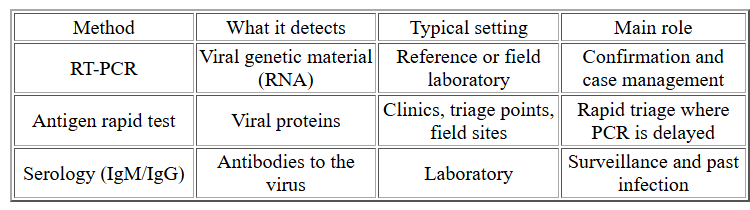
Molecular Testing: The Confirmatory Standard
Ebola laboratory diagnosis relies on reverse transcription PCR (RT-PCR), which the World Health Organization recommends as the reference method. It is highly sensitive, can be designed to identify specific virus species, and is used to confirm cases, decide on discharge and support epidemiological investigation.
Its limitations are practical rather than technical. PCR needs trained staff, power, equipment and appropriate biosafety conditions, and samples often have to travel long distances from remote areas. A negative result very early in illness, within the first three days of symptoms, may also need repeating, because viral levels can still be low.
Antigen Rapid Tests
An Ebola antigen test detects viral proteins circulating in the blood. Most products use lateral flow diagnostics, the same immunochromatographic format used in malaria and dengue rapid tests: a sample is added to a cassette, flows along a membrane, and produces a visible line if antigen is present.
The main advantage is speed and independence from laboratory infrastructure. Results are available within minutes, which makes antigen tests useful for triage and for settings that cannot reach a PCR laboratory quickly. Sensitivity is generally lower than PCR, so WHO guidance treats rapid test results as preliminary: positives should be confirmed by PCR, and negatives in a symptomatic patient should be followed up.
Antibody Testing
A serological test kit detects IgM and IgG antibodies that the immune system produces after infection. Antibodies take days to weeks to appear, so serology is not suited to diagnosing acute illness. Its value lies elsewhere: confirming past infection, studying survivors, carrying out seroprevalence surveys that reveal undetected transmission, and evaluating immune responses in vaccine research.
Where Does a Rapid Antigen Test Fit?
The rapid test's role is defined by what PCR cannot do in the field. An Ebola point of care test is most valuable in four situations.
The first is triage at entry points to health facilities, where an Ebola screening test helps staff decide quickly which suspected patients need the highest level of isolation while PCR confirmation is pending. The second is remote and hard-to-reach areas, where sending samples to a laboratory may take days and a preliminary result allows earlier action.
The third is testing of people who have died in the community. Safe burial teams need to know whether a death may be Ebola-related, and a rapid result helps target safe and dignified burial procedures and contact tracing. The fourth is surge situations, when caseloads exceed laboratory capacity and rapid tests help prioritise samples.
In every case, the rapid result supports a decision rather than closing the case. Confirmation by PCR remains the standard for final diagnosis.
Training and Quality Assurance
A rapid test is only as reliable as the person reading it. Field staff need training in sample collection while wearing full protective equipment, timing the read window, and recognising faint lines and invalid results. Programmes should also record every result with its lot number, run controls where the manufacturer supplies them, and report results promptly to the surveillance system so that confirmatory testing and contact tracing are not delayed.
What to Check Before Procuring Ebola Test Kits
Buying an Ebola rapid test kit or any Ebola diagnostic kit for outbreak preparedness involves questions that go beyond price.
Species coverage comes first. Several products were developed for Zaire ebolavirus, the species behind the largest outbreaks, but recent outbreaks caused by Sudan virus in Uganda showed that a test validated for one species may not detect another. Procurement teams should confirm exactly which species an Ebola virus test kit has been validated against.
Performance data matters next. Ask for sensitivity and specificity compared with RT-PCR, the sample types tested, and whether the evaluation used clinical samples from real outbreaks. Regulatory status should also be checked, including any WHO Emergency Use Listing, CE marking and national approvals required in the country of use.
Logistics complete the picture. An Ebola detection kit destined for field use should tolerate high ambient temperatures, carry a shelf life long enough for preparedness stockpiles, and come with clear instructions and biosafety guidance. Stockpiles also need supporting medical laboratory consumables such as personal protective equipment, sample collection materials and waste-handling supplies, so the kit can be used safely the day it is needed.
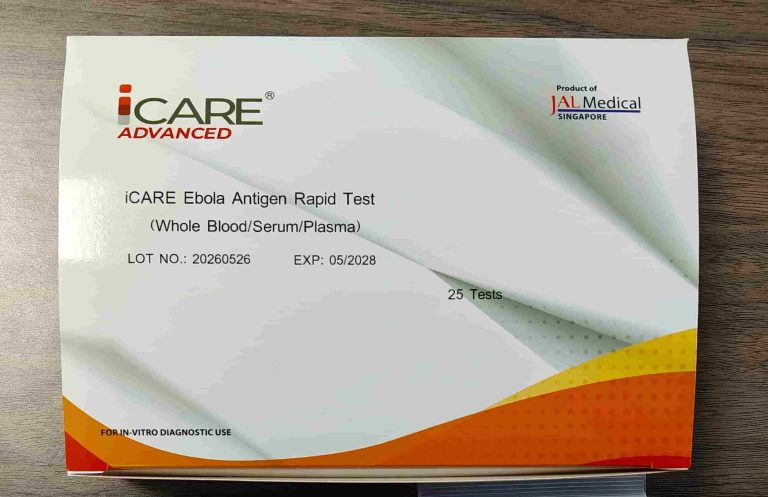
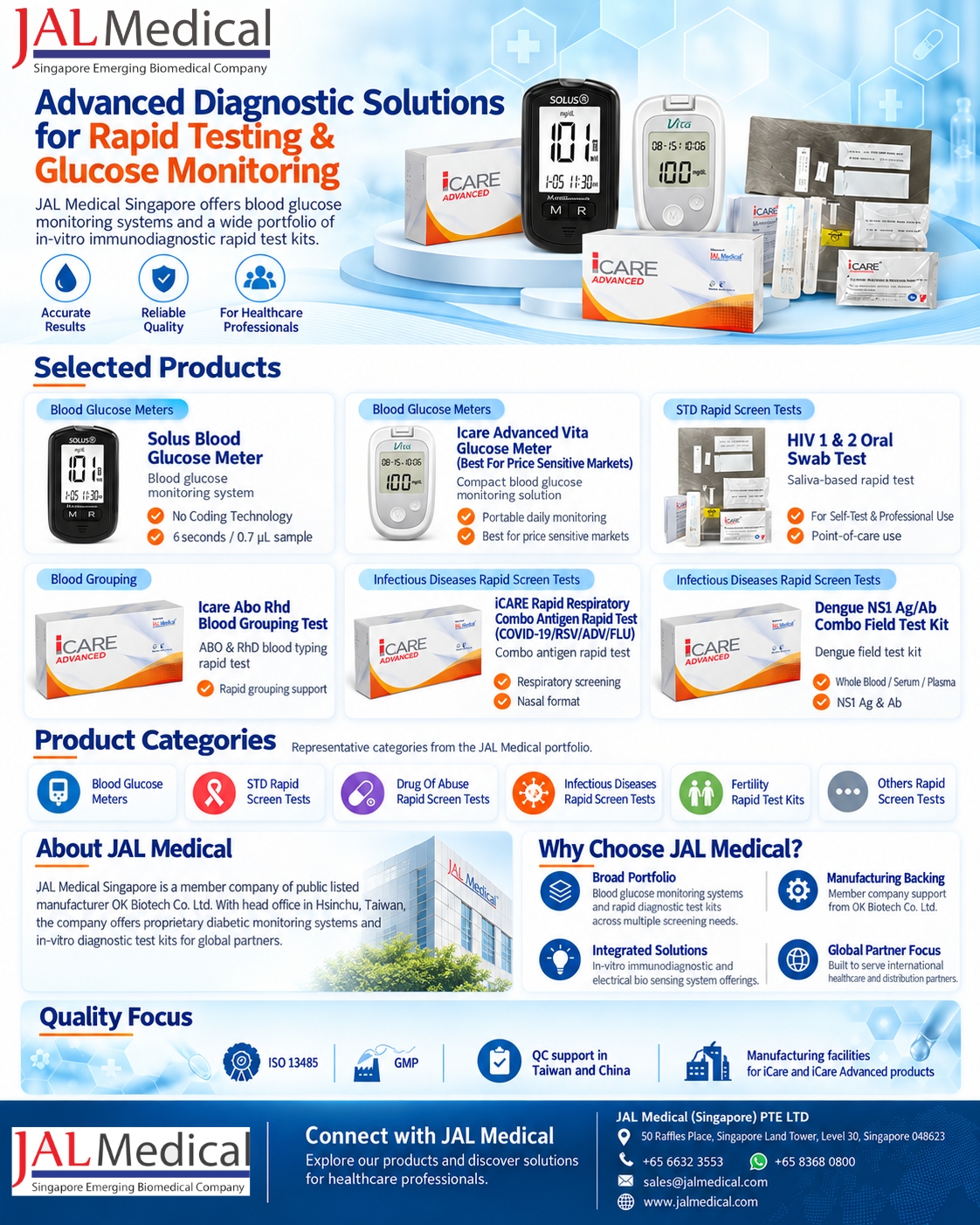
Because Ebola shares symptoms with many other febrile illnesses, response programmes rarely stock it alone. Malaria tests and a wider viral infection test kit range allow teams to look for alternative diagnoses in patients who test negative. Sourcing these medical diagnostic products from a single qualified manufacturer can simplify quality documentation and supply planning. Jal Medical lists an Ebola Antigen Rapid Test Kit within its infectious disease range, alongside malaria, dengue and other rapid tests.
Frequently Asked Questions
Can a Rapid Test Confirm Ebola on Its Own?
No. Rapid antigen tests provide a preliminary result that supports triage and early decisions. WHO guidance recommends that positive rapid test results are confirmed by RT-PCR, and that negative results in symptomatic patients are followed up.
Which Test Is Used to Diagnose Ebola in Laboratories?
RT-PCR is the reference method for laboratory diagnosis. It detects viral genetic material and can be designed to identify the specific virus species involved.
Why Is Serology Not Used for Early Diagnosis?
Antibodies take days to weeks to develop after infection, so a patient in the early stage of illness may test negative. Serology is better suited to surveillance, survivor studies and confirming past infection.
How Should Ebola Test Kits Be Stored for Preparedness?
Follow the storage range on the label and rotate stock by expiry date. Preparedness stockpiles should be reviewed regularly so that kits are still in date, and supporting supplies are complete, when an outbreak is declared.
Conclusion
Ebola diagnosis depends on matching the right test to the right moment. RT-PCR provides confirmation and remains the reference standard, rapid antigen tests support triage and decisions where laboratories are far away, and serology helps investigators understand past transmission and immunity.
When evaluating Ebola test kits, public health programmes, NGOs and distributors should consider species coverage, performance data against PCR, regulatory status, storage conditions and shelf life.
Preparedness also means planning the full testing package, including protective equipment, sample collection materials and tests for other febrile illnesses, so that frontline teams can act quickly and safely when an outbreak begins.