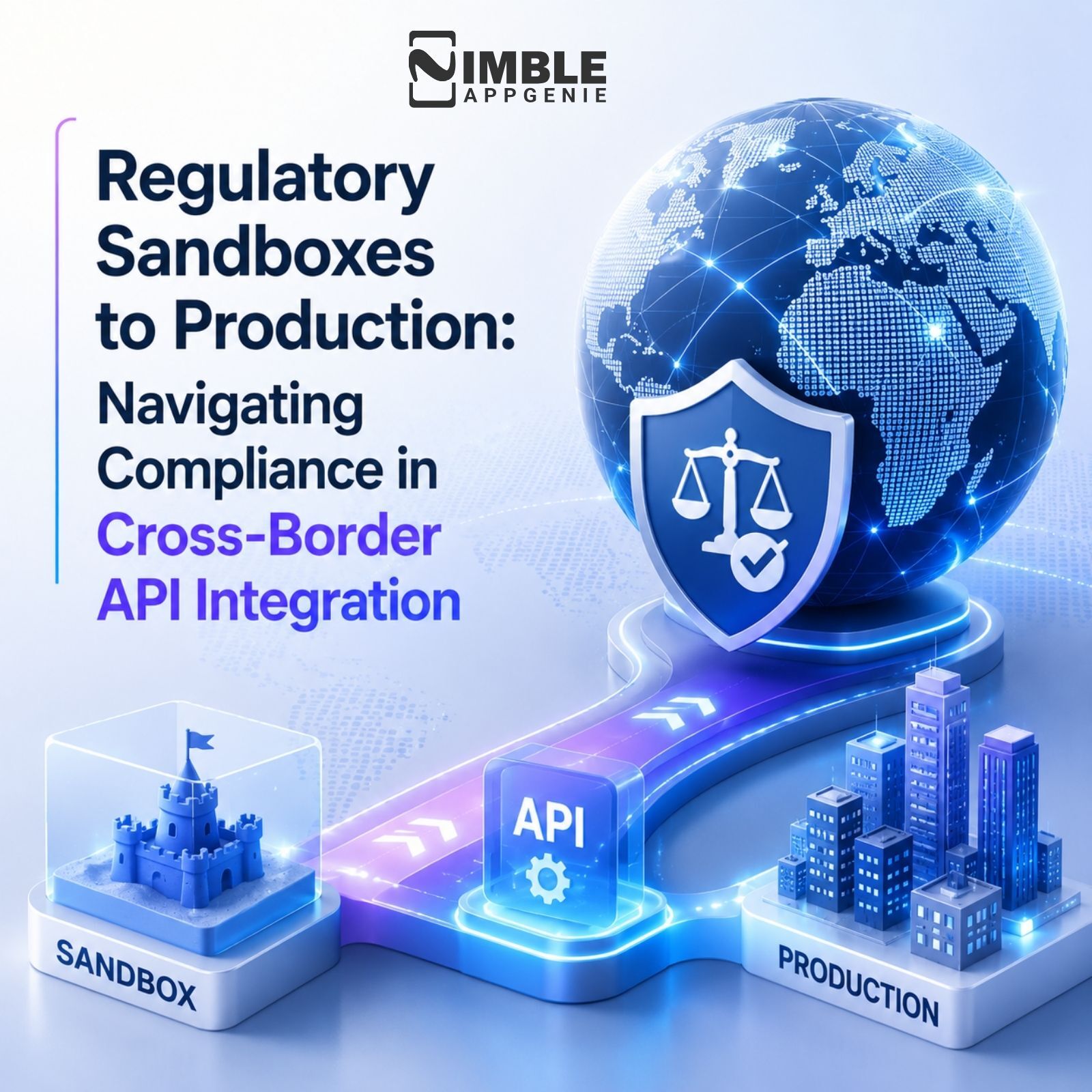
Launching a fintech product across borders means more than writing code it means proving to regulators, banks, and users that your systems are safe, compliant, and interoperable. This article breaks down how fintechs move from sandbox testing to live, cross-border deployment without losing compliance along the way.
Why Regulatory Sandboxes Matter Before Going Live
A regulatory sandbox is a controlled environment where fintechs can test products with real users under relaxed regulatory conditions, supervised by a financial authority.
The US doesn't have one federal sandbox, but state-level programs (Arizona, Utah, Wyoming) and agency initiatives like the CFPB's compliance assistance sandbox let companies pilot new payment flows, lending models, or fintech API integration designs before scaling.
Sandboxes exist to answer one question: does this product work safely at small scale before it touches real money at large scale?
What Sandboxes Actually Test
-
Data handling practices - How customer financial data is stored, encrypted, and shared
-
Transaction monitoring - Whether fraud and AML systems catch suspicious activity in real time
-
API reliability - Uptime, error handling, and failover behavior under load
-
Consumer protection - Clear disclosures, dispute resolution, and opt-out mechanisms
Passing sandbox review builds a paper trail. That documentation becomes essential later, when regulators or banking partners in a second or third country ask for evidence of compliance history.
The Real Challenge: Compliance Doesn't Travel Automatically
A common misconception is that a compliant sandbox in one jurisdiction guarantees compliance elsewhere. It doesn't. Each country and in the US, sometimes each state has its own licensing regime, data residency rule, and reporting requirement.
This is where most cross-border fintech projects stall. A company might build a strong fintech api platform domestically, only to discover that expanding into the EU or APAC requires re-architecting how consent, KYC, and transaction data flow through their system.
Key Compliance Gaps That Trip Up Cross-Border Expansion
-
Data residency laws requiring customer data to stay within national borders (common in the EU, India, and parts of the Middle East)
-
Licensing mismatches - A money transmitter license in one US state doesn't cover activity in another, let alone a foreign market
-
Divergent KYC/AML standards - Verification thresholds and reporting timelines differ by regulator
-
Currency and settlement rules governing how cross-border payments must be routed and reported
None of this is solved by better code alone. It requires a compliance-first architecture built in from day one.
Building API Infrastructure That Compliance Teams Can Trust
The technical layer and the legal layer have to move together. Strong api integrations for fintech are designed with audit trails, consent logging, and configurable data-routing rules baked into the core architecture not bolted on after a regulator raises a flag.
Practical design principles that hold up across jurisdictions:
-
Modular compliance layers - separate configuration for KYC, AML, and data residency per region, rather than one hardcoded ruleset
-
Immutable audit logs - every API call involving financial data should be timestamped, traceable, and tamper-evident
-
Consent-based data flows - explicit, revocable permissions for every data-sharing action, aligned with GDPR, CCPA, and similar frameworks
-
Regional data partitioning - storing and processing data within required borders while still enabling a unified product experience
This is where working with an experienced partner matters. Nimble AppGenie provides fintech API integration services built around exactly these principles, designing systems that satisfy US state-level regulators and international compliance regimes at the same time, rather than treating each market as a separate rebuild.
From Sandbox to Production: A Practical Rollout Path
Moving from a sandbox pilot to full production shouldn't happen overnight, and it shouldn't happen in one country at a time by accident. A structured rollout reduces both regulatory risk and engineering rework.
Steps That Reduce Cross-Border Risk
-
Map target jurisdictions early - identify licensing and data laws for every market before writing integration code
-
Choose a fintech api integration for a payments stack that supports multi-currency, multi-rail settlement out of the box
-
Run parallel sandbox tests in each priority market rather than sequential, market-by-market testing
-
Document everything - sandbox results, audit logs, and consent records should be exportable for regulator review
-
Plan for ongoing monitoring, not just launch-day compliance, since rules change and audits recur
Companies that treat compliance as a one-time checkbox tend to face costly retrofits. Those that build it into their finance api integration platform from the start scale into new markets faster and with fewer surprises.
Where Reliable Fintech API Solutions Make the Difference
Not every technical partner understands regulatory nuance, and not every compliance consultant understands API architecture. The gap between these two disciplines is exactly where most cross-border fintech projects lose time and money.
Choosing among fintech api solutions means evaluating vendors not just on uptime and documentation, but on whether they've actually shipped products through multiple regulatory regimes, sandbox and production alike.
Conclusion
Cross-border fintech success depends on compliance built into the architecture, not added after launch. From sandbox testing to production rollout, every market brings new rules. Nimble AppGenie helps fintechs design API infrastructure that meets US and international regulatory standards without slowing down growth.
Frequently Asked Questions
1. What is a regulatory sandbox in fintech?
Answer: A regulatory sandbox is a supervised environment where fintechs can test new products with real users under relaxed rules, allowing regulators to observe risk before full market approval.
2. Does the USA have a national fintech sandbox?
Answer: No single federal sandbox exists. The US relies on state-level programs and agency-specific initiatives, such as those from the CFPB, making multi-state compliance planning essential.
3. Why does cross-border API integration require separate compliance work per country?
Answer: Each country enforces its own data residency, licensing, and KYC/AML rules, so a compliant system in one jurisdiction isn't automatically compliant elsewhere.
4. How long does it take to move from sandbox to production in fintech?
Answer: Timelines vary by jurisdiction and product complexity, but most companies spend several months per market to satisfy licensing, audit, and integration requirements before full launch.
5. What should fintechs look for in an API integration partner for global expansion?
Answer: Look for proven experience across multiple regulatory regimes, modular compliance architecture, strong audit logging, and a track record of sandbox-to-production deployments.