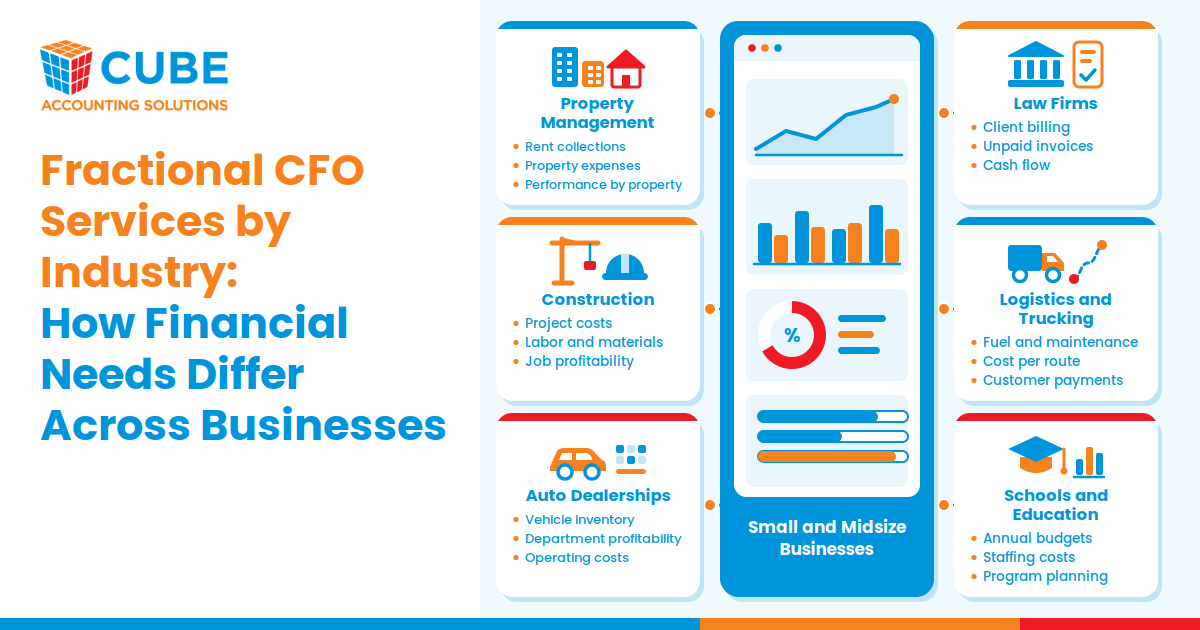
Every business needs to manage money, control expenses, and plan for the future. However, the financial challenges of a construction company can be very different from those of a law firm, property management company, or trucking business.
Some businesses struggle with changing project costs. Others need to manage customer payments, payroll, inventory, or money collected on behalf of property owners. Because each industry works differently, financial planning should reflect the way the business earns and spends money.
Fractional CFO services by industry help businesses address these differences. A fractional Chief Financial Officer (CFO) reviews financial performance, prepares forecasts, and helps owners make decisions based on their business model and goals.
This article explains how financial needs vary across industries and what a fractional CFO can help business owners understand.
What Are Fractional CFO Services?
A fractional CFO provides financial leadership on a part time or flexible basis. Instead of hiring a full time CFO, a business receives support based on its needs.
The work may include cash flow planning, budgeting, profit analysis, financial reporting, and growth planning. A fractional CFO can also help evaluate major purchases, prepare financial projections, and identify financial risks.
The purpose is to help business owners understand what their numbers mean and how those numbers can guide future decisions.
For example, a business may show a profit in its monthly reports but still struggle to pay bills on time. A CFO can review when customers pay, when expenses are due, and how much cash the business needs to keep available.
The exact work depends on the company's industry, size, financial position, and goals.
1. Property Management Companies
Property management businesses often handle rent collections, maintenance expenses, vendor payments, and financial reporting for multiple properties. Keeping these records organized is important because money collected for property owners should not be confused with the management company's own income.
A fractional CFO can help property management companies understand income and expenses across different properties. This may include reviewing management fees, maintenance costs, vacancies, unpaid rent, and operating expenses.
For companies managing several properties, separate financial reports can show which properties are performing well and which may need attention.
For example, one property may generate steady rental income but also have rising maintenance costs. Another may have lower expenses but frequent vacancies. Reviewing these differences can help owners and managers make better decisions.
Property management CFO services may also include cash flow planning, budget reviews, and reporting that helps property owners understand financial performance.
2. Construction Companies and Contractors
Construction businesses face financial challenges because projects can last for months, and costs may change before the work is finished. Materials, labor, equipment, subcontractors, and delays can all affect project profitability.
A company may receive a large customer payment but still need to cover wages and supplier bills before the next payment arrives.
A fractional CFO can help contractors track project costs, compare estimated costs with actual spending, and review how much profit each job is expected to generate.
For example, a contractor may estimate that a project will cost $200,000 to complete. If labor and material costs begin rising above the original estimate, the company needs to understand the effect on its expected profit.
Regular reviews can help identify problems before a project finishes. Financial forecasts can also help contractors plan for payroll, equipment purchases, and upcoming project expenses.
Fractional CFO for construction companies support may include job costing, cash flow planning, budget reviews, and work in progress reporting.
3. Auto Dealerships
Auto dealerships manage several sources of revenue and expenses. These may include new vehicle sales, used vehicle sales, service departments, parts sales, financing activity, and inventory costs.
A dealership may generate strong sales but still face pressure from inventory financing, changing vehicle prices, or rising operating costs.
A fractional CFO can review financial performance across departments and help management understand where the business earns its profit.
For example, vehicle sales may increase while service department margins decline. Looking at each department separately can help the dealership understand whether labor costs, parts expenses, pricing, or other factors are affecting results.
Financial reporting can also help management review inventory levels, operating expenses, and cash needs.
Dealership CFO and controller services may support better budgeting, department level reporting, and decisions about inventory and operating costs.
4. Law Firms
Law firms often need to manage attorney compensation, employee salaries, client billing, collections, operating expenses, and partner distributions.
One common challenge is the time between performing legal work and receiving payment. A firm may have many billable hours recorded but not enough cash available to cover current expenses.
A fractional CFO can help review billing patterns, unpaid invoices, collection times, and the cost of running the firm.
For example, a law firm may have a large amount of unbilled work. If that work is not billed promptly, the firm may experience cash pressure even when attorneys are busy.
Financial reporting can also help partners understand profitability by practice area, client, or attorney where reliable data is available.
Law firm CFO services may include cash flow forecasting, expense planning, profitability reviews, and analysis of partner compensation or distributions.
5. Logistics and Trucking Companies
Trucking and logistics businesses face changing fuel prices, vehicle maintenance costs, driver wages, insurance expenses, and customer payment schedules.
A company may have trucks on the road every day but still struggle to maintain healthy profit margins. The reason may be that operating costs are increasing faster than the rates charged to customers.
A fractional CFO can help analyze revenue and costs by truck, route, customer, or type of service when the business has reliable operating data.
For example, a route may generate regular revenue but require more fuel, maintenance, and driver time than expected. Reviewing its financial performance can help management decide whether to adjust pricing, change operations, or negotiate better terms.
Cash flow planning is also important because fuel, payroll, and maintenance often need to be paid before customers settle their invoices.
Fractional CFO for logistics and trucking companies support may include cost analysis, cash flow forecasts, budgeting, and financial performance reporting.
6. Schools and Education Organizations
Charter schools, homeschool organizations, and other education providers may work with tuition, grants, donations, public funding, or program fees. Their financial needs depend on how they receive funds and what restrictions apply to that money.
These organizations must plan for staffing, facilities, supplies, technology, transportation, and other operating costs. They may also need to prepare budgets that cover an entire academic year.
A fractional CFO can help prepare financial forecasts, monitor spending against budgets, and estimate the cost of adding students, staff, or programs.
For example, a school considering a new program needs to understand the cost of instructors, materials, space, and administration. It also needs to estimate whether expected funding will cover those costs.
Financial planning can help education leaders make decisions while keeping resources aligned with their educational goals.
7. Small and Midsize Businesses
Small and midsize businesses operate across many industries, from professional services to retail and manufacturing. Their financial needs depend on how they earn revenue, manage costs, and serve customers.
Common challenges include unpredictable cash flow, rising expenses, unclear profit margins, and limited time for financial planning.
A fractional CFO can help owners prepare budgets, forecast cash needs, review financial results, and plan for growth.
For example, a business may be considering hiring more employees because customer demand is increasing. A financial forecast can help estimate the additional payroll costs and the revenue needed to support the new hires.
Fractional CFO services for small business can also help owners understand whether they have enough cash to expand, which services are most profitable, and what financial targets they should track.
Why Industry Knowledge Matters
Financial reports may look similar across businesses, but the meaning behind the numbers can vary.
A high inventory balance may be normal for a dealership but require closer attention for a company with slow moving products. A construction company needs to understand costs by project, while a law firm may need to focus more on billing and collections.
Industry knowledge helps a CFO ask better questions and focus on the numbers that matter most.
When reviewing a business, a fractional CFO may consider:
-
How the company earns revenue
-
When customers pay
-
Which expenses change with sales or activity
-
What costs are fixed each month
-
How the business measures profitability
-
What risks could affect future cash flow
-
Which financial reports management needs to make decisions
Fractional CFO services by industry should reflect these differences instead of relying on the same financial plan for every company.
How to Choose the Right Fractional CFO Support
Before hiring a fractional CFO, business owners should identify their main financial challenges and goals.
Consider these questions:
-
Do I understand which parts of my business are profitable?
-
Can I estimate upcoming cash needs?
-
Do I have a budget that is reviewed regularly?
-
Can I explain why actual results differ from expectations?
-
Am I planning to expand, borrow money, or make a major investment?
-
Does the CFO understand the financial challenges common in my industry?
It is also useful to ask what reports and forecasts will be prepared, how often meetings will take place, and how the CFO will work with existing accounting staff.
The business should understand the scope of support before agreeing to an arrangement. Not every company needs the same number of hours or the same level of financial analysis.
How Cube Accounting Solutions Approaches Financial Support
Cube Accounting Solutions is based in Santa Ana, California, and serves businesses across the United States. Its services include Accounting Services, Tax Services, Fractional CFO Services, and Staff Augmentation Services.
Financial needs vary by company, so the type of support should reflect each business's operations, reporting needs, and plans for growth. Clear accounting records provide a foundation for budgeting, forecasting, and financial analysis.
Final Thoughts
Different industries face different financial challenges. Construction companies need to monitor project costs, property managers need clear property level reporting, law firms must manage billing and collections, and trucking companies need to understand operating costs.
Fractional CFO services by industry help businesses focus on the financial information most relevant to their operations. With useful forecasts, regular reporting, and clear financial goals, owners can better understand risks and evaluate opportunities.
The first step is to identify where your business needs more clarity. Once you understand the questions that need answering, you can decide what financial support will help you plan for the future.